

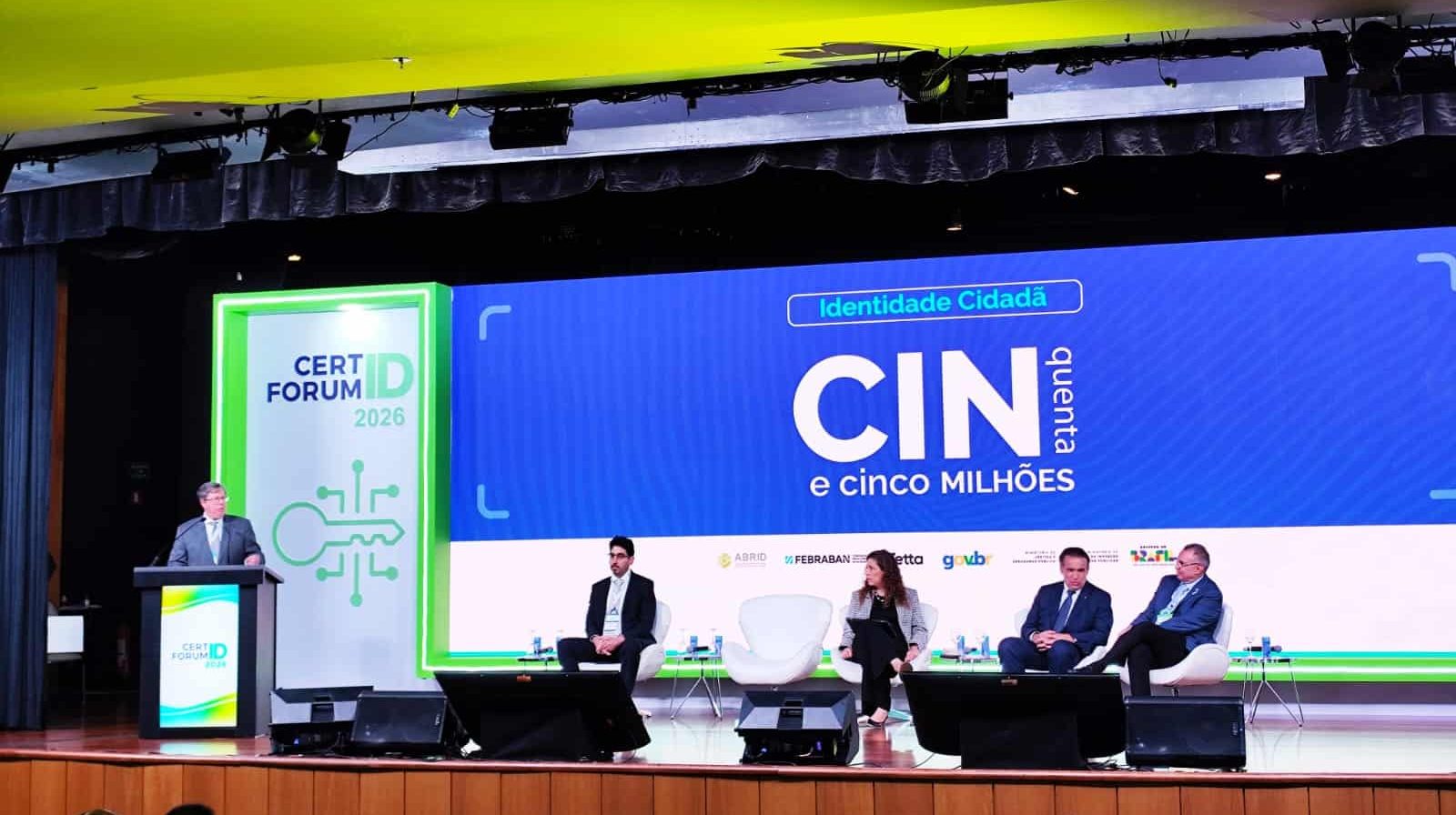
Held in Brasília, the 2026 edition marked the 25th anniversary of ICP-Brasil and celebrated the issuance of 55 million National Identity Cards, positioning Brazil as one of the most prominent global case studies in digital identity, legal certainty, and trusted electronic transactions

By Susana Taboas, Co-founder do Crypto ID
Brazil has built one of the most ambitious digital trust infrastructures in the world.
That was the central message of CertForum-ID 2026, held in Brasília on June 9 and 10. The event brought together government authorities, regulators, industry associations, legal experts, technology providers, and digital identity specialists to discuss the country’s progress in civil identification, digital certificates, electronic signatures, and secure data interoperability.
This year’s edition had a particularly symbolic meaning. It celebrated the 25th anniversary of ICP-Brasil, the Brazilian Public Key Infrastructure, and the milestone of 55 million National Identity Cards, known as CINs, already issued nationwide.
For the international market, CertForum-ID 2026 offered a clear message: Brazil is not merely digitizing documents. It is structuring a national infrastructure of trust designed to connect civil identity, digital credentials, legal certainty, and secure electronic transactions at scale.
Building, at the same time, a national civil identification infrastructure and a legally grounded digital certification infrastructure with security, scale, and legal certainty is an achievement that only a few countries can claim, and Brazil is one of them.
At CertForum-ID 2026, the market celebrated 25 years of ICP-Brasil and the issuance of 55 million National Identity Cards, a milestone volume that surpasses the total population of roughly 170 countries, according to Worldometers data based on United Nations estimates and the UN World Population Prospects.
A national identity project, not a government project
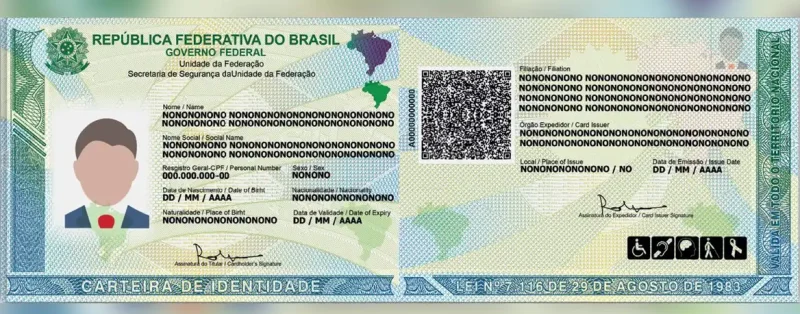
One of the most important ideas reinforced during the event was that the National Identity Card is not a project of a single state, but a national project.
The CIN represents Brazil’s effort to unify civil identification around the CPF, the national taxpayer registry number, which now serves as the unique identifier for citizens. The document also incorporates security and interoperability elements, including a cryptographic QR Code and machine-readable features aligned with international standards.
The scale is undeniable. Reaching 55 million CINs issued in under four years places Brazil at the forefront of global identity deployments. With the federal government aiming for 130 million cards by the end of 2026, this achievement stands out not only for its numbers but for the complex federated integration it requires among federal, state, and local stakeholders in a country of continental dimensions.
Celebrating 25 years of ICP-Brasil as the backbone of legal trust
The other major milestone celebrated at CertForum-ID 2026 was the 25th anniversary of ICP-Brasil.
Established in 2001, ICP-Brasil set the legal and technical standards for qualified digital certificates in the country. Over the past 25 years, this initial framework consolidated into a robust network managed by a Root Authority, alongside dynamic Certification and Registration Authorities, rigorous audits, and continuous regulatory oversight.
For international readers, ICP-Brasil is essential to understanding Brazil’s digital trust model. It is not only a cryptographic infrastructure. It is a legal infrastructure.
A qualified electronic signature produced with an ICP-Brasil digital certificate carries a presumption of authorship and integrity under Brazilian law. In practical terms, this means that, in the event of a legal dispute, the burden of proof shifts to the party challenging the signature. This is a decisive distinction in contracts, regulated transactions, litigation, corporate governance, and high-risk digital processes.
This legal and technical structure translates into real market scale. Approximately 3 million electronic documents are processed daily in Brazil through ICP-Brasil qualified digital certificates. This volume shows that qualified electronic signatures underpin the country’s digital economy, securing contracts, corporate activities, public services, and financial transactions.
International observers frequently highlight this specific strength of the Brazilian model. Legal trust is not just a regulatory concept on paper; it is a practical reality deployed nationwide.
Moving beyond the basics of legal certainty and electronic signatures
One of the most relevant discussions at CertForum-ID 2026 was focused on legal certainty and electronic signatures. The panel made clear that many companies still do not fully understand the distinction between electronically signing a document and signing it with a legal presumption of authorship. This distinction is fundamental.
In Brazil, multiple types of electronic signatures are valid depending on the context, mutual agreements, and regulatory requirements. However, the qualified electronic signature backed by an ICP-Brasil certificate carries distinct evidentiary weight. It relies on a strictly regulated identification process, audited authorities, and a robust legal framework that guarantees its probative value.
This differentiation is critical for organizations managing high-stakes transactions, financial agreements, medical records, or corporate compliance. Choosing a signature solution extends beyond user experience and operational efficiency; it is a strategic decision regarding liability, risk management, and legal certainty.
AR Electrônica
CertForum-ID 2026 showcased the operational updates shaping ICP-Brasil.
Recent ITI regulations introduced the AR Eletrônica and updated self-assisted validation rules, creating a more scalable issuance model. This shift delivers secure digital journeys without weakening identity proofing or auditability. With AI-driven fraud and deepfakes rising worldwide, the focus has firmly shifted toward advanced biometrics and controlled digital onboarding.
Secure interoperability as a strategic layer
Another important topic discussed at the forum was secure data interoperability.
As digital identity becomes central to public services, financial systems, healthcare, education, mobility, and private-sector transactions, the ability to exchange data securely becomes a strategic requirement.
For Brazil, this challenge is especially relevant because the country is simultaneously expanding its national identity system, strengthening digital certificates, modernizing public services, and increasing the use of electronic signatures across the economy.
The combination of identity, trust infrastructure, and secure interoperability may become one of Brazil’s strongest assets in the digital economy.
Beyond the institutional and regulatory discussions, CertForum-ID 2026 also highlighted the presence of technologies directly connected to the evolution of digital identity and electronic trust.
During the event, biometric solutions were presented for secure identification, identity verification, fraud prevention and protection against impersonation attempts in digital environments, with applications in both public security and private-sector operations.
Cryptographic equipment and advanced security technologies were also showcased, including approaches designed to address the challenges brought by quantum computing. Together, these solutions reinforce the idea that a trust infrastructure depends not only on legal frameworks and governance models, but also on technologies capable of protecting credentials, transactions, sensitive data and identity processes at national scale.
Why Brazil matters in the global digital identity debate
CertForum-ID 2026 showed that Brazil deserves closer attention from the international digital identity and trust services community.
The country combines several elements that are often discussed separately in other markets: a national civil identity program, a mature public key infrastructure, legally recognized qualified electronic signatures, large-scale digital public services, private-sector adoption and an active regulatory agenda.
The result is a digital trust environment that is both technical and legal, public and private, national and scalable.
Brazil’s experience may offer important lessons for countries designing or updating their own digital identity frameworks. It also creates opportunities for international cooperation, especially in areas such as trust services, digital credentials, secure onboarding, biometric validation, electronic signatures, cross-border recognition, and interoperability.
A new identity layer for the Brazilian digital economy
The broader message from CertForum-ID 2026 is that identity is becoming a strategic infrastructure.
In the digital economy, identity is no longer just an administrative record or a credential used to access a service. It is the foundation for trust, security, compliance, fraud prevention, legal certainty, and digital sovereignty.
Brazil is now connecting its civil identity infrastructure with its digital certification ecosystem and electronic transaction environment. The process is complex, but the direction is clear.
After 25 years of ICP-Brasil, 55 million CINs issued and approximately 3 million documents signed daily with qualified digital certificates, Brazil is entering a new phase in its digital transformation. The country is not only creating digital documents. It is building the trust infrastructure required for a more secure, interoperable, and legally reliable digital society.
Coverage by Crypto ID and interviews in Portuguese
Crypto ID has made a broad editorial coverage of CertForum-ID 2026, including interviews in Portuguese with authorities, association leaders, legal experts, and executives from Brazil’s digital certification and identity ecosystem.
These interviews can be watched on Crypto ID’s official social media profiles, including LinkedIn, Instagram, and YouTube, where the main discussions from the event are being published for the Brazilian audience.
Historically organized by the Brazilian Association of Digital Identification Technology Companies, known as ABRID, this edition of CertForum-ID was co-organized by the National Association of Digital Certification (ANCD), with institutional support from the Ministry of Management and Innovation in Public Services (MGI), the National Institute of Information Technology (ITI), and technical support from the Brazilian Federal Police, which plays a strategic role in the country’s identity and secure document ecosystem.
The central theme of the 2026 edition was Trust Infrastructure, structured around three pillars: Identity, Legal Certainty, and Digital Scale.
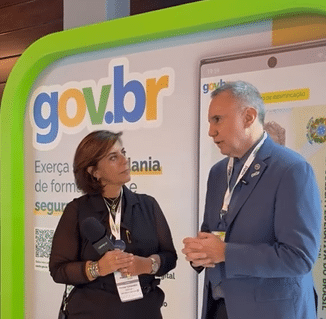
The opening of the event set a clear tone: the National Identity Card, or CIN, is not a government project. It is a national project.
Rogério Mascarenhas, Secretary of Digital Government at MGI, emphasized that the modernization of Brazil’s identification system represents an unprecedented federative integration initiative, connecting the federal government, states, and municipalities around a common national identity infrastructure.
By celebrating both the 25th anniversary of ICP-Brasil and the milestone of 55 million CINs issued, CertForum-ID 2026 showed how Brazil is bringing together civil identification, qualified digital certificates, legal certainty, and digital public services into a single strategic agenda.
LinkedIn | Instagram | Youtube
CertForum-ID 2026 comemora 25 anos da ICP-Brasil e a marca de 55 milhões de CINs emitidas

Crypto ID stands at the forefront of the global digital transformation, delivering high-level analysis on the critical pillars of the digital economy: Cybersecurity, Digital Identity, Cryptography, Biometrics, and Blockchain.
For over more than a decade, we have shaped the conversation around digital trust, providing the market with the insights needed to navigate an increasingly complex security landscape. We believe that trust is not just a concept – it is the foundational currency of the digital future.
By aligning your brand with Crypto ID, you are not just advertising; you are championing the technological innovations that power secure, frictionless transactions between businesses and global citizens|. contato@cryptoid.com.br
More about the International News
Siga o Crypto ID no LinkedIn agora mesmo!