

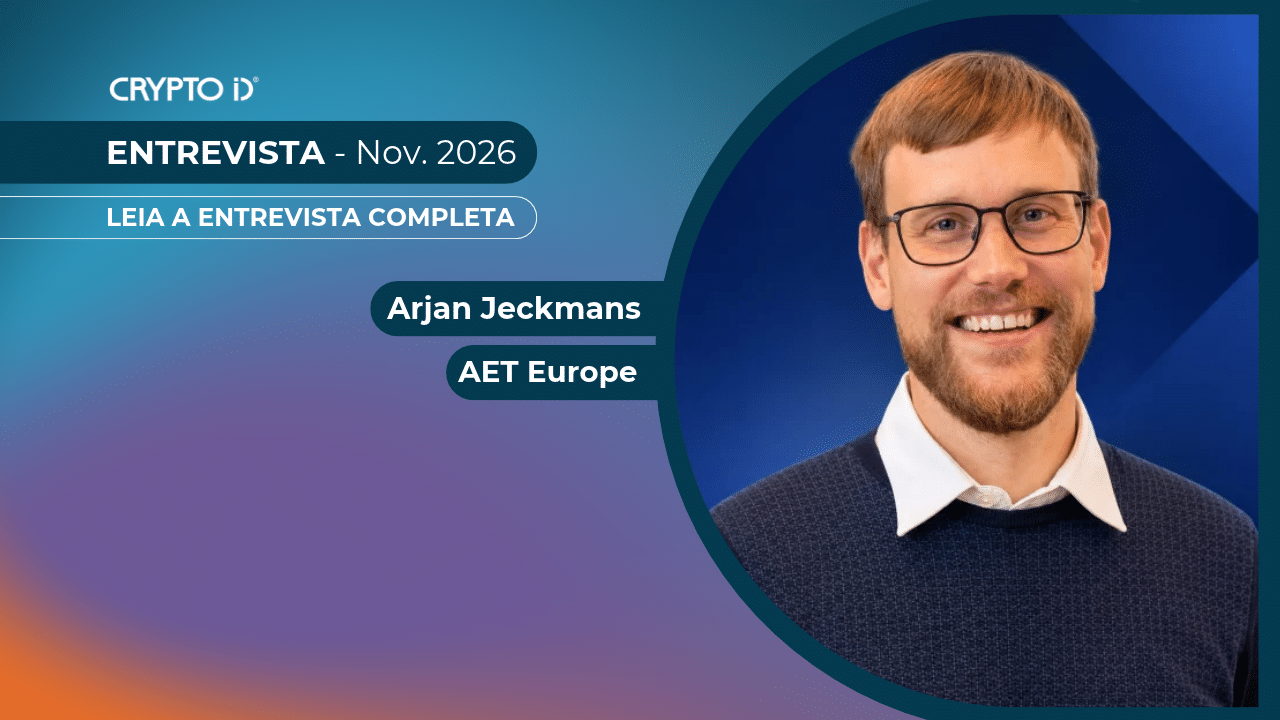
Arjan Jeckmans discusses global standards, security challenges, and the transition to post-quantum cryptography
The publication of the final version of NIST IR 8547 on October 27, 2026, marked another important milestone in the international transition to post-quantum cryptography (PQC). The US roadmap outlines the progressive phase-out of quantum-vulnerable public-key algorithms, including RSA and elliptic-curve-based algorithms, with key milestones in 2030 and 2035.
However, this transformation is already part of broader international cybersecurity initiatives. In June 2025, the European Union published its coordinated transition roadmap, developed by the NIS Cooperation Group with support from the European Commission. The United Kingdom, through the National Cyber Security Centre (NCSC), and Canada have also established their own guidance and migration timelines.
The challenge extends far beyond replacing cryptographic algorithms. It involves the evolution of communication protocols, security architectures, authentication mechanisms, data protection, global technology supply chains, and systems that must remain secure and interoperable for decades.
To explore these developments in greater technical depth, Crypto ID invites a cryptography specialist, Chief Technology Officer (CTO) at AET Europe, Arjan Jeckmans, to participate in this edition of ID Talk, focusing on international standards convergence, the maturity of post-quantum technologies, and the risks governments and businesses will face throughout this transition.

Arjan Jeckmans, Chief Technology Officer (CTO) at AET Europe, holds a PhD in Applied Cryptography from the University of Twente in the Netherlands, where he also earned a Master of Science in Computer Security and a Bachelor of Science in Computer Science.
His academic background includes research on the application of cryptography to privacy protection and information security. He has authored and co-authored scientific publications, including research on privacy-preserving cryptographic mechanisms in digital systems.
Read the full interview
1. International convergence and standards harmonization
Crypto ID: The final version of NIST IR 8547 establishes milestones for 2030 and 2035, while the European Union has already introduced a coordinated roadmap developed by the NIS Cooperation Group with support from the European Commission. The United Kingdom and Canada have also established their own migration timelines. Are we moving toward genuine international convergence in cryptographic algorithms, security requirements, and migration deadlines, or are there still significant differences between these approaches? Which differences could directly affect technology manufacturers and organizations operating globally?
Arjan Jeckmans: There is genuine convergence, but it is convergence on the destination rather than on every step of the journey.
The major jurisdictions are increasingly aligning around the same technical foundation. ML-KEM, ML-DSA and SLH-DSA are becoming the common algorithm baseline. The roadmaps broadly converge on completing migration by approximately 2035, while earlier milestones for inventory, planning and high-priority systems vary by jurisdiction, generally falling between 2028 and 2031.
There are differences in scope and transition philosophy. Europe places relatively strong emphasis on risk-based and hybrid migration. The UK anticipates coexistence between classical and post-quantum mechanisms and stresses cryptographic agility. The US has a clearer end state in which dependence on RSA and elliptic-curve cryptography is removed.
These differences directly affect global manufacturers. A product may need multiple policy configurations, different assurance or validation evidence, hybrid operation during one market’s transition, and the ability to disable classical algorithms in another market. Algorithm support alone is therefore not enough. Products need crypto-agility, upgradeable trust anchors, protocol-level interoperability, downgrade protection and a reliable cryptographic inventory.
Organizations should build one common PQC-capable technical platform, but not one inflexible global configuration. The platform should support standardized algorithms and protocols, while policy profiles, transition modes and assurance evidence remain configurable by jurisdiction and sector.
2. Technical differences between the US and European approaches
Crypto ID: NIST has led the standardization of algorithms such as ML-KEM, ML-DSA, and SLH-DSA, while Europe is developing its own initiatives for coordinating the transition, security evaluation, and product certification. From AET Europe’s perspective, what are the most significant technical differences between the US and European approaches, particularly regarding algorithm selection, hybrid models, implementation validation, and certification requirements? Is there a risk that solutions technically compliant with one region’s standards may not fully meet another region’s requirements?
Arjan Jeckmans: The technical difference is no longer primarily about the underlying algorithms. ML-KEM, ML-DSA and SLH-DSA are becoming the shared international baseline. The difference is increasingly about how implementations are validated, how algorithms are integrated into protocols, and how complete products are certified.
The US currently provides particularly mature algorithm- and cryptographic-module validation mechanisms through CAVP, ACVP and CMVP. European requirements combine algorithm and implementation assurance with broader product-security, lifecycle and vulnerability-management obligations under instruments such as EU Common Criteria and the Cyber Resilience Act.
Hybrid cryptography is one area where this difference becomes visible. Combining a classical algorithm with a post-quantum algorithm is not simply a matter of enabling both. The combination itself must define secret composition, failure behavior, downgrade protection, protocol negotiation and certificate representation.
There is therefore a genuine risk of regional compliance gaps. A FIPS-validated implementation may not provide all the product-level evidence required for European certification. A European-approved hybrid profile may not match a US requirement for a particular FIPS parameter set, module boundary, or pure-PQC end state.
At AET Europe, we therefore distinguish between algorithm compliance, protocol compliance, implementation validation and product certification. A global product needs a crypto-agile core, configurable hybrid and pure-PQC profiles, and evidence architecture that can support multiple certification regimes. In PQC, supporting the correct algorithm is essential, but it is no longer sufficient.
3. Cryptographic architectures and migration complexity
Crypto ID: The transition to post-quantum algorithms involves much more than replacing RSA and ECC. It may require changes to protocols, data formats, cryptographic libraries, authentication mechanisms, and communication architectures. Which components of digital infrastructure are likely to face the greatest adaptation challenges? How can organizations maintain performance, interoperability, and operational continuity throughout migration, particularly across distributed environments, cloud services, APIs, industrial systems, and legacy applications?
Arjan Jeckmans: The greatest difficulties will occur where public-key cryptography is deeply embedded in protocols, hardware and long-lived trust relationships.
PKI and digital identity infrastructures are particularly affected because certificates, enrollment, trust stores, validation, signing and timestamping must all support new algorithms and larger cryptographic objects. The challenge is greater for smart cards, secure elements, HSMs, industrial equipment and embedded devices, where replacement cycles are much longer than normal software cycles.
Communication protocols present a second challenge. TLS, VPNs, secure email and API security define much more than an algorithm: they include negotiation, certificate exchange, message limits, failure behavior and fallback. PQC and hybrid mechanisms can increase handshake sizes and processing requirements, which may affect constrained, high-latency or heavily distributed environments.
Cloud environments create an additional dependency problem. An organization may control its application but depend on a cloud provider, identity service, API gateway, SaaS platform or hardware supplier for the underlying cryptography. Migration therefore requires visibility across the complete supply chain, not only inside the organization’s own source code.
Operational continuity is best maintained through a staged, risk-based migration. Organizations should begin with a cryptographic inventory covering algorithms, keys, certificates, protocols, libraries, hardware and externally managed services. They should then prioritize systems according to data lifetime, exposure, operational criticality and replacement difficulty.
The architecture itself must become crypto-agile. Algorithms, providers, certificate profiles and trust policies should be replaceable without redesigning the application. Hybrid and pure-PQC profiles should be tested in realistic environments for interoperability, latency, throughput, message size, memory use, failure handling and downgrade resistance.
Organizations must also be able to observe what happens in production: which algorithms were negotiated, where classical cryptography remains a dependency and whether fallback occurred. Otherwise, nominal support for PQC can create a false impression of completed migration.
At AET Europe, we see this as a lifecycle and architecture challenge rather than an algorithm-replacement project. The goal should be a controlled transition in which classical, hybrid and pure-PQC profiles can coexist temporarily within defined boundaries, with explicit criteria for eventually disabling quantum-vulnerable cryptography.
4. Hybrid approaches, security, and cryptographic maturity
Crypto ID: During the transition, hybrid solutions may combine traditional and post-quantum cryptographic mechanisms. However, such combinations do not automatically guarantee security. Which technical properties must be verified in algorithm composition, key-establishment protocols, and protection against downgrade attacks? How should organizations assess resistance to side-channel attacks, interoperability, and implementation maturity before deploying these technologies in production environments?
Arjan Jeckmans: Hybrid cryptography must be evaluated as a single construction, not as two independently secure algorithms placed next to each other.
In hybrid key establishment, the classical and post-quantum secrets must be combined through a well-analyzed key-derivation construction that binds both contributions, the selected algorithms and the protocol transcript. The intended security property should be explicit: ideally, the resulting session remains secure as long as at least one component remains secure. Failure behavior is equally important. Invalid ciphertexts, decapsulation failures and malformed keys must not produce timing differences, distinguishable errors or insecure fallback paths.
Downgrade protection must cover the complete negotiation. An attacker should not be able to remove PQC capabilities or force a classical-only connection without detection. Algorithm selection and transition mode should therefore be authenticated as part of the handshake. If classical-only operation remains necessary for compatibility, it must be an explicit, logged and policy-controlled exception rather than silent fallback.
For hybrid signatures, organizations must verify that both signatures apply to the same identity, message and context, and determine whether both must validate. They must also consider whether a component signature can be separated and reused independently.
Before production deployment, organizations should require multiple forms of evidence: stable standards, independent review, implementation validation, side-channel testing, multi-vendor interoperability, production-like pilots, operational telemetry and a credible vulnerability-response process. No single certificate or successful test is sufficient.
Hybrid cryptography can reduce transition risk, but only when the composition, implementation and operational controls are all demonstrably secure. Otherwise, it may add complexity without adding effective protection.
5. Risks for organizations that fail to keep pace with the transition
Crypto ID: Beyond the threat known as Harvest Now, Decrypt Later, what are the main technical, operational, and commercial risks facing organizations that remain dependent on quantum-vulnerable algorithms? Could inadequate planning compromise interoperability with international partners, compliance with contractual and regulatory requirements, the protection of strategic information, or the continuity of critical services? How should organizations distinguish risks that already require mitigation from those that depend on the future development of cryptographically relevant quantum computers?
Arjan Jeckmans: The immediate risk is not that quantum computers will break RSA or ECC tomorrow. It is that organizations will start too late to migrate complex dependencies safely.
The risks already requiring action include interoperability, compliance, supplier dependency and operational continuity. As governments and international partners adopt PQC requirements, organizations that cannot support the required algorithms, certificates or protocols may lose access to trusted ecosystems or future contracts. A rushed migration could also disrupt authentication, signing and critical services.
The direct cryptographic threat depends on a future cryptographically relevant quantum computer. That includes breaking RSA and ECC to decrypt information, forge signatures or impersonate systems. But preparation cannot wait for certainty about that date because migration may take many years.
Organizations should therefore compare the lifetime of their information and trust relationships with the time required to migrate. Long-lived confidential data, software-signing infrastructures, trust anchors and critical systems require attention now. PQC readiness should be treated as present-day resilience and lifecycle obligation, not merely as a response to a future quantum computer.
6. Technological sovereignty and supplier dependency
Crypto ID: The post-quantum transition also raises questions about governments’ and businesses’ dependence on international suppliers of software, cryptographic libraries, cloud services, and communication protocols. Considering different regulatory frameworks and migration timelines across countries, how can organizations preserve their technological autonomy and ability to replace cryptographic algorithms without relying exclusively on suppliers’ upgrade cycles? Which governance requirements, implementation transparency measures, and crypto-agility capabilities will be essential to prevent new forms of technological dependency?
Arjan Jeckmans: Technological autonomy does not require organizations to build every cryptographic component themselves. It requires them to retain control over cryptographic policy, migration decisions and supplier replacement.
Governance should therefore define approved algorithms, transition profiles, ownership, migration deadlines and supplier obligations. Contracts should require transparent cryptographic inventories, supported standards, update commitments, vulnerability handling and clear exit provisions.
Technically, products must separate cryptographic policies from application logic. Algorithms, libraries, HSMs, trust anchors and protocol profiles should be replaceable through standardized interfaces and controlled updates. Organizations should also avoid proprietary hybrid mechanisms that create new interoperability or vendor dependencies.
The essential principle is that suppliers may provide the implementation, but the organization must retain the ability to understand, configure, validate and replace it. Crypto-agility without implementation transparency or governance simply transfers dependency from one algorithm to one supplier.
7. AET Europe’s global readiness and recommendations for the market
Crypto ID: Given AET Europe’s international presence and experience in digital trust technologies, how is the company preparing its architectures and product portfolio for the post-quantum transition? Are there ongoing development initiatives, interoperability tests, implementations of new algorithms, or crypto-agility strategies aligned with international roadmaps? From your specialists’ perspective, what are the three most important technical decisions governments and businesses should make now to ensure a secure, economically sustainable, and technologically interoperable transition?
Arjan Jeckmans: At AET Europe, we are moving post-quantum cryptography from research into product development. We have implemented hybrid PQC for TLS in BlueX. And current initiatives include expanding crypto-agility, Cryptographic Bill of Materials (CBOM) transparency, and PQC with smart-card-backed keys in SafeSign.
Our objective is to separate algorithms and parameters from business logic, support configurable classical, hybrid and pure-PQC profiles, and make certificate formats, trust policies and hardware dependencies replaceable. Interoperability testing across protocols, libraries, HSMs and smart-cards will be essential before production adoption.
The three decisions organizations should make now are:
- Create a cryptographic inventory and migration priority model, so they know where vulnerable algorithms are used and which systems must move first.
- Make crypto-agility an architectural requirement, covering protocols, certificates, software libraries, HSMs and trust anchors rather than algorithms.
- Test the ecosystem, not only the algorithm: verify protocols, certificate chains, HSMs, smart cards and multi-vendor operation under production-like conditions.
These decisions reduce emergency replacement costs while preserving security, supplier choice and international interoperability.
Closing Remarks
The transition to post-quantum cryptography represents far more than a technological upgrade. It requires governments and organizations to rethink how they protect information, establish digital trust, and ensure the continuity of their systems.
The challenge is to manage this transformation on an international scale while balancing security, interoperability, technological autonomy, and the ability to adapt to future threats.
Crypto ID thanks AET Europe and its participating executive for contributing to this important discussion about the future of cryptography and digital security.
About Arjan Jeckmans
Arjan Jeckmans, Chief Technology Officer (CTO) at AET Europe, holds a PhD in Applied Cryptography from the University of Twente in the Netherlands, where he also earned a Master of Science in Computer Security and a Bachelor of Science in Computer Science.
His academic background includes research on the application of cryptography to privacy protection and information security. He has authored and co-authored scientific publications, including research on privacy-preserving cryptographic mechanisms in digital systems.
Referências oficiais
- NIST IR 8547 | Final publication, October 2026
- European Commission | Coordinated PQC Roadmap
- UK NCSC | PQC Migration Timelines
ID Talk | Oracle apresenta Fusion Claw para ampliar a segurança na execução de agentes de IA
EUDI Wallet: AET Europe leva identidade digital em escala a governos
A Segurança Dos Seus Dados É Tão Importante Quanto A Dos Seus Bens Mais Preciosos. Por AET Europe

A AET Europe dedica-se, há mais de duas décadas, ao desenvolvimento de soluções de segurança digital confiáveis e inovadoras. A empresa é especialista em proteger informações sensíveis, assegurar identidades digitais e garantir a integridade de dados e comunicações para organizações em todo o mundo. Sua paixão pela inovação e o compromisso em construir relacionamentos de confiança a diferenciam como líder do setor. No centro de tudo o que realiza, estão valores fundamentados em ser progressista, dedicada, engenhosa e confiável.
Leia outros excelentes artigos da AET Europe aqui!

Crypto ID stands at the forefront of the global digital transformation, delivering high-level analysis on the critical pillars of the digital economy: Cybersecurity, Digital Identity, Cryptography, Biometrics, and Blockchain.
For over more than a decade, we have shaped the conversation around digital trust, providing the market with the insights needed to navigate an increasingly complex security landscape. We believe that trust is not just a concept – it is the foundational currency of the digital future.
By aligning your brand with Crypto ID, you are not just advertising; you are championing the technological innovations that power secure, frictionless transactions between businesses and global citizens|. contato@cryptoid.com.br
More about the International News